

Best 10 Masterpiece AI Image Prompts for Hyper Detailed Premium Artwork of Serene Nature Landscapes
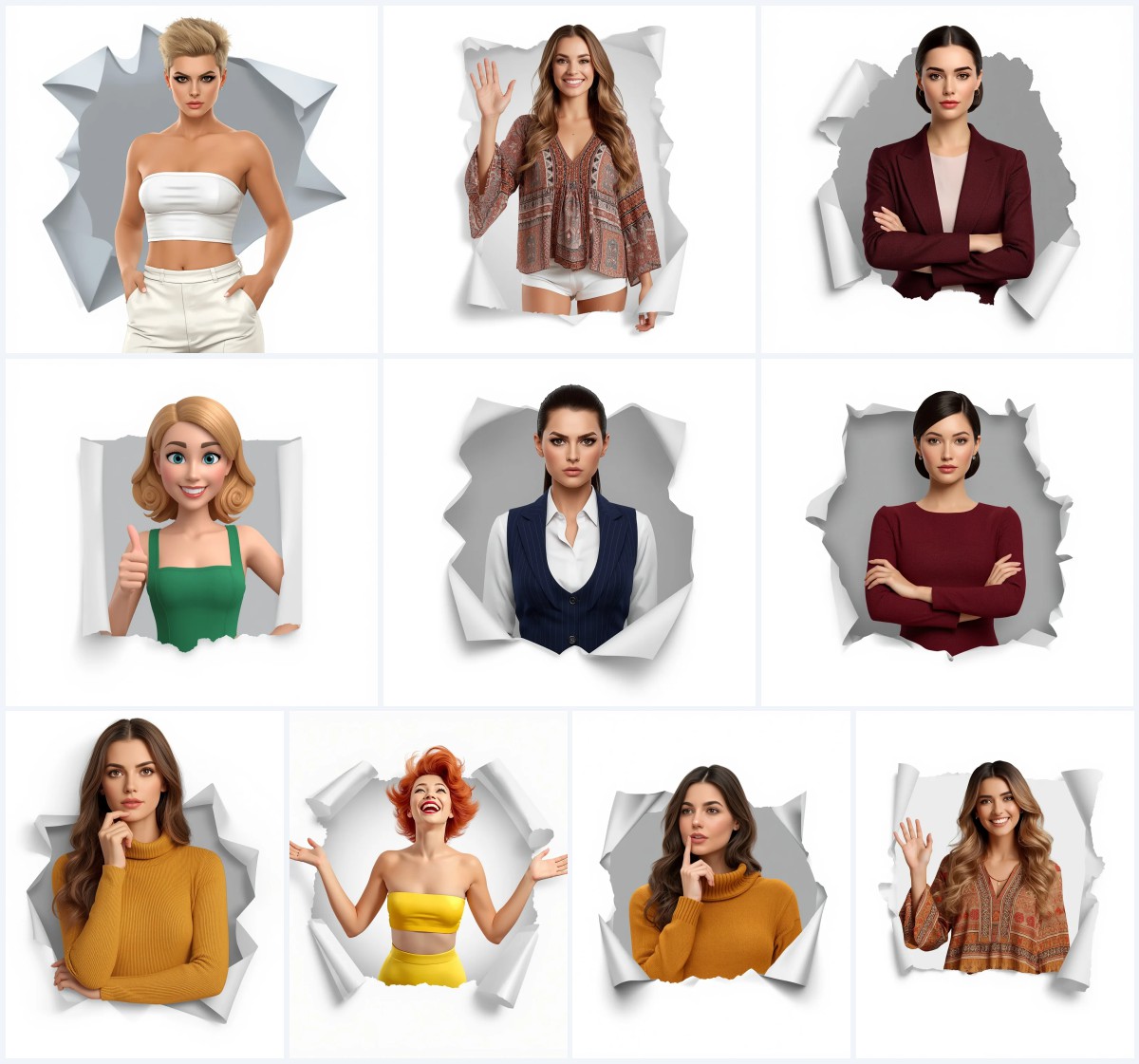
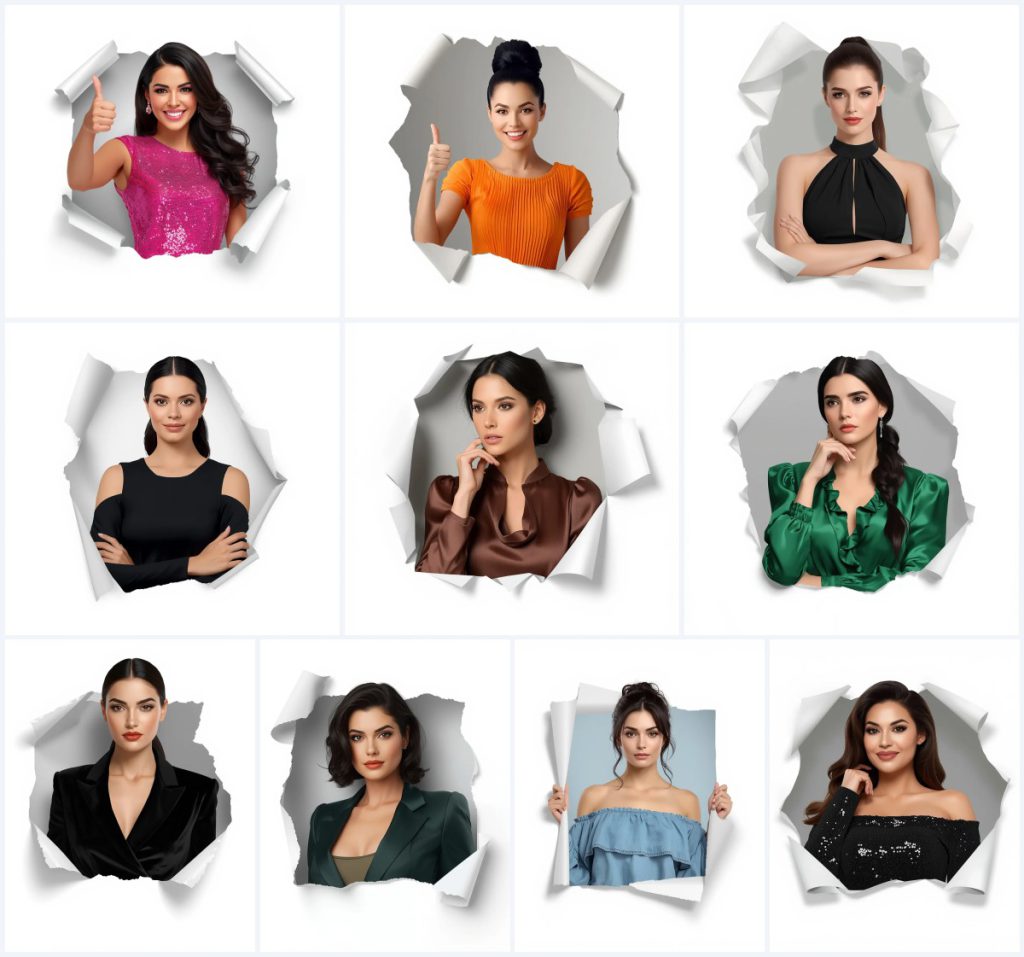
This collection brings together ten carefully crafted AI image prompts, each designed to produce a hyper-detailed, premium portrait of a woman emerging through a torn paper hole. The shared scene creates a striking 3D illusion, where realistic ripped edges wrap around her upper body and a soft grey gradient adds believable depth. Every prompt preserves the subject’s facial identity from a reference photo, making these ideal for anyone who wants a consistent, polished look across multiple images.
What makes this set special is the variety of outfits, poses, and moods, all built on the same eye-catching torn-paper framework. From a sparkly electric pink sequin mini dress to a structured dark green satin blazer, the wardrobe choices range from playful to sophisticated. The expressions shift from a friendly thumbs-up to a cool smirk or a thoughtful hand on the chin, giving you a versatile gallery without ever losing that premium, editorial finish.
What this torn-paper portrait collection is asking for
Across all ten prompts, the core idea is a half-body portrait where a woman appears to pop out from a torn paper surface. The AI is instructed to keep her face consistent with a provided reference image, so the same person can wear different outfits and strike different poses. The torn edges must look realistic, wrapping naturally around her chest and shoulders, and the inside of the hole uses a soft light grey gradient to fake a convincing 3D depth effect.
- A half-body, chest-up portrait with facial identity preserved from a reference image
- A torn paper hole with realistic ripped edges wrapping around the upper body
- A soft light grey gradient inside the paper hole to create depth
- A specific outfit such as an electric pink sequin mini dress, an orange pleated dress, or a black velvet blazer dress
- A distinct hairstyle like voluminous curls, a high ponytail, a low chignon, or a side braid
- A clear expression or gesture: thumbs-up, arms crossed, hand on chin, wink, or a confident smirk
The shared torn-paper scene and how it reads in the prompts
Every prompt in this collection builds the same theatrical setup: the subject breaks through a paper plane, creating a hybrid of 2D texture and 3D presence. Clauses like “emerges dynamically through a torn paper hole” and “realistic ripped edges wrapping naturally around her upper body” appear verbatim, ensuring the AI understands that the paper isn’t just a flat frame but an active part of the composition. The “soft light grey gradient” inside the hole is repeated exactly, which helps the model render a consistent lighting pocket that separates the woman from the background.
The prompts then layer identity and fashion on top of this base. For example, one card says she is “dressed in a sparkly electric pink sequin mini dress, shimmering elegantly with every movement,” while another describes a “structured dark green satin blazer, worn as a top, showcasing sharp tailoring and a luxurious sheen.” Despite the shared structure, each prompt uses its own clothing texture—sequins, pleats, satin, denim, velvet—to give the AI a fresh material to render, keeping the series visually connected but never repetitive.
Why these torn-paper portrait prompts work so well
These prompts succeed because they combine a strong compositional gimmick with precise material and lighting cues. The torn paper effect immediately grabs attention, while the reference-image instruction keeps the face stable across ten different looks. The result is a set of images that feel like a high-end editorial spread, perfect for portfolios, social media, or branding projects where you need variety without losing identity.
- The torn paper hole creates an instant focal point and a believable 3D illusion that makes the portrait feel premium and dynamic
- Repeating the same base scene with different outfits and poses gives you a cohesive series that still offers plenty of visual variety
- Preserving facial identity from a reference photo ensures the same person appears across all images, which is ideal for personal branding or character consistency
Three styles you can pull from this prompt collection
Although the prompts share a common framework, they naturally lean into three distinct visual styles. The first is hyper-realistic editorial, where sharp lighting and fabric textures like sequins and satin mimic a magazine cover. The second is playful commercial, seen in the thumbs-up and wink poses with bright colors. The third is moody fashion, driven by darker tones, structured tailoring, and confident expressions. All three styles stay within the torn-paper setup, so you never lose the signature look.
- Hyper-realistic editorial: The emerald green satin blouse with delicate ruffles and the soft, flowing sleeves pushes the AI to render fine fabric details and nuanced lighting that belong in a glossy fashion spread.
- Playful commercial: The sparkly electric pink sequin mini dress and the friendly thumbs-up gesture create a bright, approachable image that would fit a lifestyle ad or a social-media campaign.
- Moody fashion: The chic black velvet blazer dress with sharp lapels and a sophisticated double-breasted design, combined with a slight smirk, gives the portrait a darker, high-fashion attitude.
How to generate these torn-paper portraits step by step
Start by selecting the specific prompt card you want to use from the collection, such as the one with the orange pleated dress or the mocha satin blouse. Copy the full prompt text exactly as written, then upload a clear reference photo of the person whose face you want to preserve. Paste the prompt into your chosen AI image tool, attach the reference image, and generate the portrait. After generation, inspect the hands, face, and the torn paper edges closely to make sure everything looks natural and consistent.
- Copy the prompt. Choose one card from the collection and copy its full text without altering any of the clothing, pose, or lighting details.
- Upload a reference photo. Use a well-lit, front-facing portrait where the subject’s facial features are clearly visible, so the AI can map the identity accurately.
- Generate the image. Paste the prompt into your AI tool, attach the reference photo, and run the generation at a high resolution for the best fabric and paper-edge detail.
- Check the hands. Look for unnatural finger positions or fused digits, especially in poses like the thumbs-up or the hand resting on the chin.
- Check the face. Compare the generated face with your reference to ensure the identity is preserved and the expression matches the prompt, such as a wink or a confident smirk.
- Check the torn paper. Inspect the ripped edges and the grey gradient inside the hole to confirm the 3D illusion works and the paper wraps naturally around the shoulders.
Choosing the right reference photo for these prompts
The reference photo is the foundation of this entire collection, since every prompt instructs the AI to preserve the subject’s facial identity. A well-chosen image makes the difference between a convincing series and one where the face drifts from card to card. Pay attention to lighting, angle, and expression, because the AI will carry those qualities into the generated portraits.
- Use a front-facing, chest-up portrait with even, soft lighting so the AI can read facial features without harsh shadows interfering
- Pick a neutral or pleasant expression that can adapt to multiple moods, from a friendly thumbs-up to a cool, confident smirk
- Avoid busy backgrounds or accessories that might confuse the AI when it tries to isolate and preserve the face across different outfits
AI tools that handle these prompts best
Different AI image generators will interpret the torn-paper effect, fabric textures, and facial-identity preservation with varying levels of success. The table below compares four popular tools, rating their typical realism and noting what each one is particularly useful for when working with this prompt collection.
| Tool | Access | Typical realism | Useful here for |
|---|---|---|---|
| ChatGPT | Subscription-based | High | Preserving facial identity across all ten outfits, including the shimmering black sequin off-shoulder top |
| Google Gemini | Free tier available | Medium-High | Rendering the torn paper hole and the soft light grey gradient with consistent depth |
| Leonardo AI | Freemium | High | Capturing fabric details like the draped cowl neckline on the mocha satin blouse |
| Midjourney | Subscription-based | Very High | Producing hyper-detailed textures on the sparkly electric pink sequin mini dress and realistic ripped edges |
Three tips to get the most from this prompt set
Small adjustments to how you run these prompts can dramatically improve the output. Focus on the materials named in the cards, because the AI responds strongly to specific fabric words. Also, treat each card as a standalone generation rather than trying to batch-process them, which helps the model give each outfit and pose the attention it deserves.
- Emphasize the sequin textures in prompts like the electric pink mini dress or the black off-shoulder top by generating at higher resolutions, so the shimmer reads clearly
- For the satin blouses, especially the mocha and emerald green ones, use a tool known for fabric rendering to capture the cowl neckline and ruffled V-neckline accurately
- When working with the denim off-shoulder top, mention the “subtle distressed details” in any negative-prompt field to avoid the AI smoothing them out into a plain fabric
Common problems with these prompts and how to fix them
Even well-written prompts can produce flawed results. The table below lists four issues that frequently appear when generating this torn-paper portrait series, along with straightforward changes you can make to the prompt or the process to correct them.
| Issue | What to change |
|---|---|
| The face does not match the reference photo | Increase the weight on the facial-identity phrase or use a tool with stronger face-locking features, and make sure the reference image is well-lit and front-facing |
| The torn paper edges look flat or cartoony | Add terms like “photorealistic paper texture” or “highly detailed ripped edges with fiber tears” to the prompt, and generate at a higher resolution |
| The sequins or satin appear as a solid color without texture | Specify the material more explicitly, for example “individual sequins catching the light” or “satin with a soft, directional sheen,” and avoid low-resolution settings |
| The 3D depth effect fails and the subject looks pasted on | Reinforce the grey gradient instruction by adding “smooth gradient from light grey to white inside the hole” and ensure the ripped edges wrap around the body, not just frame it |
Frequently Asked Questions
Can I use these prompts without a reference photo?
You can, but the facial-identity instruction will be ignored or produce a random face. The torn-paper effect and outfits will still work, but the series won’t feature the same person across all ten images.
Will the torn paper hole look the same in every generated image?
The AI will interpret “realistic ripped edges” differently each time, so the shape and tear pattern will vary. The grey gradient and the general illusion of depth should remain consistent if the prompt is used as written.
Which outfit in this collection is easiest for AI to render realistically?
Solid, structured fabrics like the black velvet blazer dress or the dark green satin blazer tend to produce the most reliable results. Highly reflective materials like sequins may need extra resolution or specific tool settings to look convincing.
Conclusion
This collection of ten torn-paper portrait prompts gives you a ready-made formula for hyper-detailed, premium artwork with a consistent subject and a striking visual hook. By mixing different outfits, poses, and expressions—from a playful wink in a shimmering black sequin off-shoulder top to a composed stance in a classic black halter neck dress—you can build a versatile gallery that still feels cohesive. The key is to use a strong reference photo, pick the right AI tool for the fabric textures you care about most, and check the small details like hands and paper edges before finalizing any image. With a little attention to those elements, you’ll have a polished set of portraits that look professionally produced and entirely your own.
Remember to edit only a photo you have the legal right to modify, and always respect the privacy and consent of the person in the reference image.