

Best 10 Beautiful Girl’s AI Prompts for Aesthetic Fashion Photography with Playful Elements
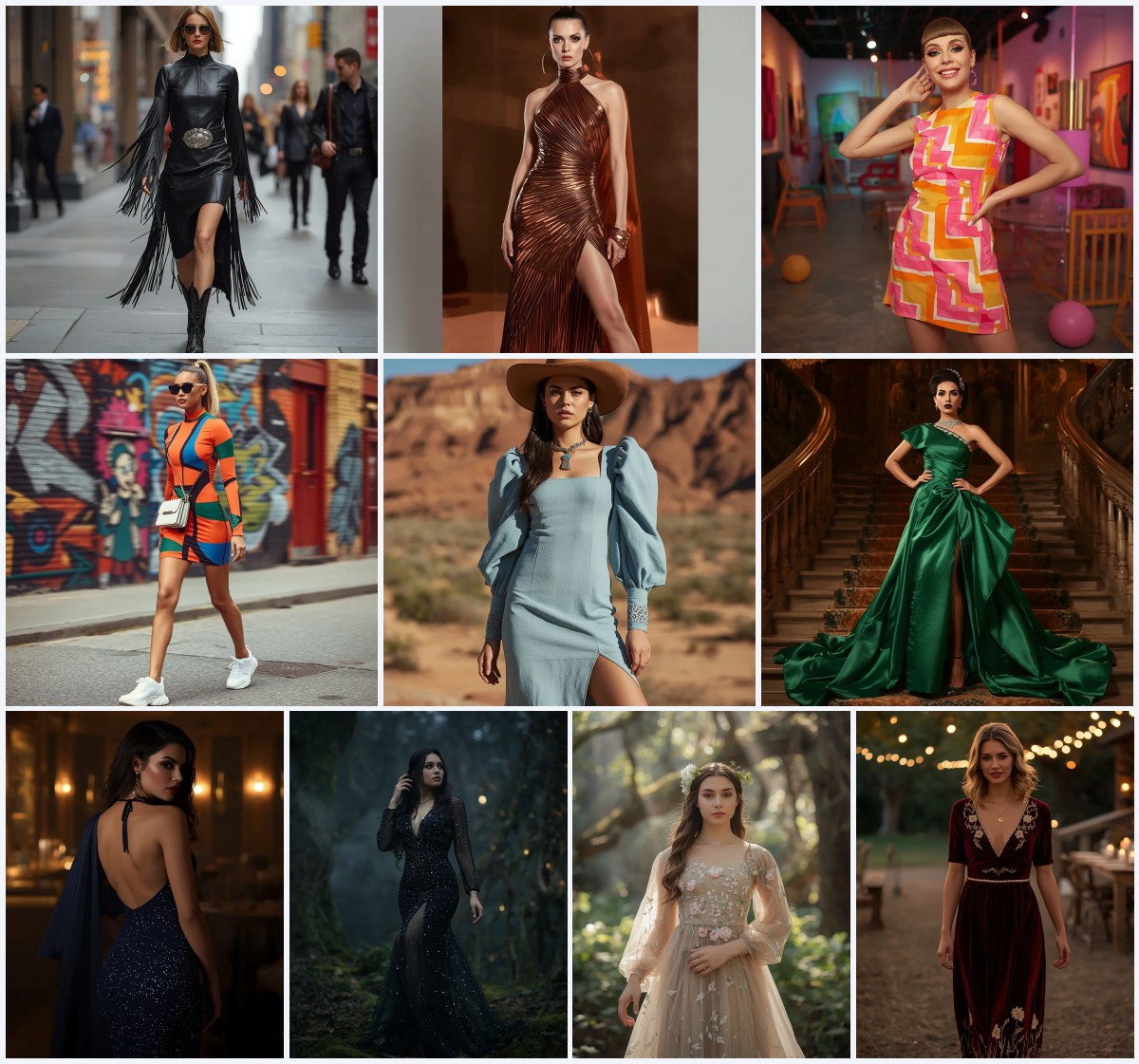
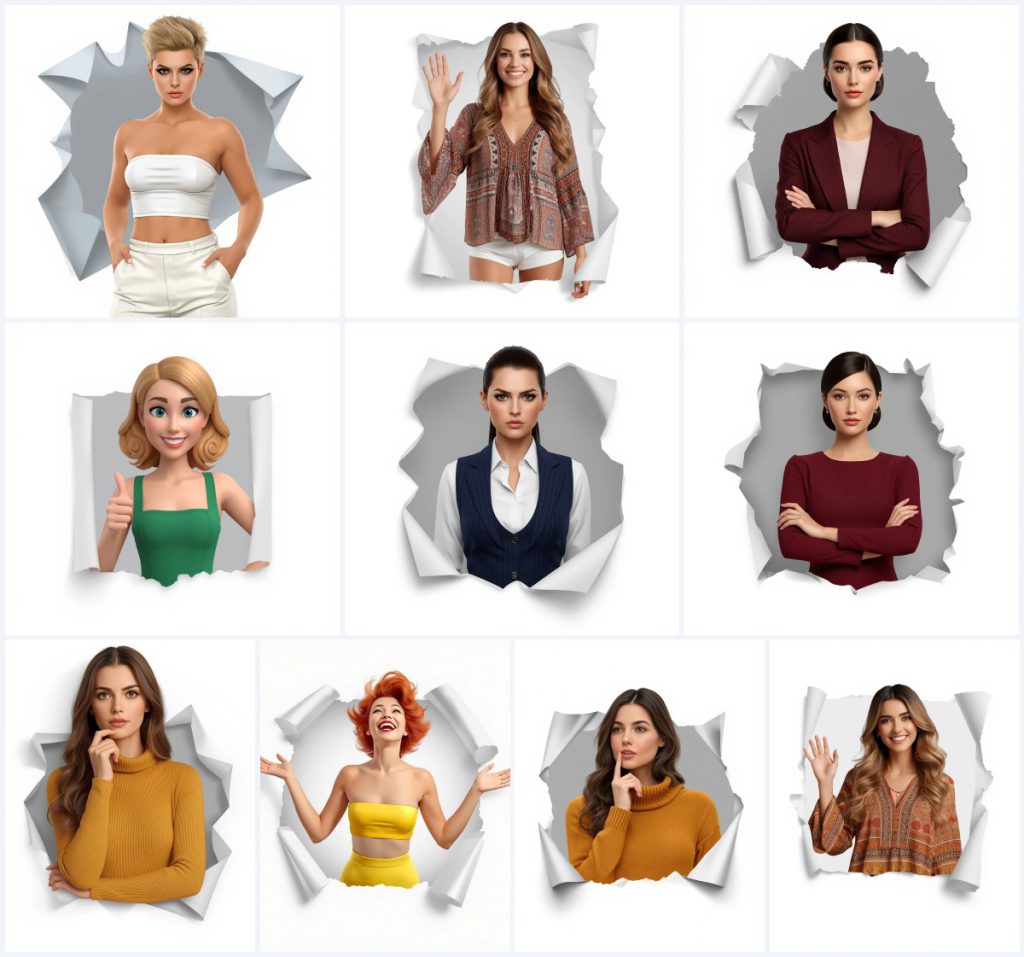
Fashion photography meets playful surrealism in this set of ten AI image prompts, each designed to capture a beautiful woman in a distinct western outfit and expressive pose. The unifying visual twist is a torn paper hole effect that makes the subject appear to burst through the surface, adding palpable 3D depth and a tactile, editorial edge.
These prompts span a range of moods—from rebellious confidence and serene composure to ecstatic laughter and quiet introspection—paired with specific wardrobe details like a sleek white tube top, a maroon tailored dress coat, or a mustard knit top. Whether you are building a cohesive avatar series or experimenting with character-driven fashion shots, this collection offers a versatile foundation for stunning, high-impact images.
What this best-of-ten fashion prompt collection is asking for
Across all ten prompts, the core request is a half-body portrait of a beautiful woman whose upper body and face appear to emerge through a realistic torn paper hole. Each variation changes the hair, eye color, outfit, pose, and emotional expression while preserving the ripped-edge framing and modern western fashion aesthetic.
- A beautiful woman with distinct hair (spiky short blonde, long light brown waves, sleek dark brown bun, bouncy shoulder-length blonde, long wavy brunette, vibrant fiery red) and specific eye colors (smoky, hazel, blue, dark, green, brown).
- A stylish western outfit such as a white tube top with invisible tailored dress pants, a patterned boho tunic with invisible white shorts, a maroon tailored dress coat, an emerald green A-line dress, a navy blue pinstripe vest, a mustard knit top or sweater, or a bright yellow tube top with an invisible mini skirt.
- An expressive pose and gesture: hand casually on hip, enthusiastic wave, arms crossed calmly, thumbs-up, serious direct gaze, hand on chin in thought, or head thrown back in laughter.
- A torn paper hole with realistic, ripped edges wrapping naturally around her half-body to create a palpable 3D depth.
- A half-body framing that makes her pop from the surface, emphasizing the illusion of emerging through paper.
- A specific mood or emotion: edgy and rebellious, approachable and welcoming, powerful and composed, cheerful and optimistic, conflicted and serious, thoughtful and introspective, or ecstatic and uninhibited.
The shared torn-paper scene across all ten prompts
The scene is not a full environment but a graphic, editorial composition where the subject breaks through a flat surface. Every prompt includes the clause “emerges through a torn paper hole with realistic, ripped edges wrapping naturally around her half-body,” which remains constant while the woman’s appearance and mood shift dramatically. The torn paper acts as both a frame and a storytelling device, suggesting the subject is literally stepping out of a magazine page or a conceptual art piece.
Quoted details like “a palpable 3D depth that makes her pop from the surface” and “the interior of the torn hole” reinforce the illusion of physical layers. In some prompts, the woman’s hand “casually pushed into an invisible pocket” or “one hand gently raised to her chin” interacts with the edge of the tear, blending pose with the paper-rip effect. The consistent half-body crop and invisible clothing elements keep the focus on facial expression, gesture, and the surreal framing.
Why this torn-paper fashion collection works so well
This prompt set succeeds because it combines high-fashion portraiture with a single, repeatable surreal element that adds visual intrigue without overwhelming the subject. The torn paper hole unifies the series while each outfit, hairstyle, and emotion creates enough variety for a dynamic gallery or avatar lineup.
- The torn paper effect adds editorial flair and a tactile, mixed-media feel that makes each portrait stand out from standard fashion headshots.
- Varying poses and emotions—from a thumbs-up to crossed arms—allow you to generate a full range of character expressions for storytelling, branding, or social-media avatars.
- The consistent half-body framing and invisible clothing details keep the AI focused on the upper body, face, and hands, reducing the risk of full-body distortion and improving output quality.
Three visual styles you can apply inside these prompts
The torn-paper avatar concept naturally supports a few distinct stylistic treatments that you can weave into the prompt language without breaking the core scene. Below are three styles that fit the collection, each adding a different flavor while preserving the ripped-edge framing and fashion focus.
- Hyperrealistic editorial: Add terms like “hyperrealistic texture, sharp focus, magazine editorial lighting” to make the paper fibers, skin texture, and fabric details look almost tangible.
- Soft pastel pop-art: Use “soft pastel color palette, pop-art halftone shadows, matte finish” to give the torn paper and outfits a playful, illustration-like quality while keeping the 3D depth.
- High-contrast noir: Include “high-contrast chiaroscuro, deep shadows, cinematic rim light” to turn the emerging figure into a dramatic, film-noir statement with intense mood.
How to generate and refine a torn-paper fashion portrait
Getting a clean torn-paper effect with a natural pose requires careful prompt handling and a few post-generation checks. The steps below walk you through copying the prompt, using a reference, and verifying the tricky parts like hands and facial coherence.
- Copy the full prompt text. Choose one of the ten titles—for example, the Ultra Chic Woman in a Stylish White Tube Top—and copy its complete prompt into your AI image generator.
- Upload a reference photo. If the tool supports image input, upload a clear half-body portrait with similar lighting and pose to guide the composition, face shape, and paper-tear placement.
- Generate the initial image. Run the prompt at a square or 4:5 aspect ratio. The half-body framing works best when the canvas is not too wide, keeping the torn edges prominent.
- Check the hands. Look closely at the hand on the hip, the waving hand, or the hand on the chin. If fingers merge with the torn paper or look unnatural, inpaint that area with a focused hand prompt.
- Check the face and eyes. Ensure the eyes match the described color and the gaze direction feels intentional. Smoky eyes, hazel irises, or bright blue eyes should read clearly without uncanny artifacts.
- Check the torn paper edges. Verify that the ripped edges wrap around the body naturally. If the tear looks like a flat sticker, add “realistic paper fiber details, subtle shadows along the tear” in a refinement pass.
Choosing a reference photo for the torn-paper fashion look
A well-chosen reference photo can dramatically improve the realism of the pose and the integration of the torn paper effect. The reference does not need to include the paper tear—it should focus on the woman’s upper body, expression, and lighting.
- Use a half-body portrait with clear, even lighting and a plain background so the AI can easily separate the figure and add the torn paper edges.
- Match the pose to your chosen prompt: if generating the woman with arms crossed, pick a reference where the arms are folded similarly to avoid awkward limb generation.
- Select a photo where the face shows the intended emotion—serious, laughing, or thoughtful—because the AI will carry that expression into the final image more reliably.
AI tools for generating torn-paper fashion avatars
Each AI image generator handles the mix of fashion detail and surreal paper effects differently. The table below compares four popular tools, noting their access model, typical realism level, and why they are useful for this specific prompt collection.
| Tool | Access | Typical realism | Useful here for |
|---|---|---|---|
| ChatGPT | ChatGPT Plus with DALL·E integration | High, with strong prompt adherence | Rendering the torn paper hole with realistic ripped edges and maintaining the specific hair textures like spiky short blonde. |
| Google Gemini | Gemini Advanced with Imagen | Moderate to high, good at conceptual scenes | Capturing the 3D depth effect and the interplay between the woman’s pose and the paper surface. |
| Leonardo AI | Freemium with daily tokens | High, excellent for stylized realism | Producing the intricate geometric patterns on the boho tunic and the soft knit texture of the mustard yellow sweater. |
| Midjourney | Paid subscription via Discord | Very high, cinematic and editorial | Delivering the intense smoky eyes and the sleek white tube top with a quintessential modern western cool look. |
Three tips for nailing the torn-paper fashion prompt
Small adjustments to how you describe materials and edges can make the difference between a flat composite and a convincing 3D breakout. These three tips focus on real objects and surfaces named in the prompts.
- Emphasize the paper texture by adding “visible paper fibers and a slight shadow along the torn edge” when the ripped hole looks too digital or clean.
- For the navy blue pinstripe vest, mention “sharp lapels with subtle fabric weave” to prevent the AI from blurring the pinstripe pattern into a solid color.
- When generating the bright yellow tube top or the emerald green A-line dress, include “soft fabric folds and a matte cotton finish” to avoid shiny, plastic-looking materials.
Common issues and what to change
Even well-crafted prompts can produce flawed results. The table below lists four frequent problems with this torn-paper fashion collection and the specific prompt adjustments that help fix them.
| Issue | What to change |
|---|---|
| The torn paper looks like a flat frame instead of wrapping around the body. | Add “the paper edges curl slightly over her shoulder and arm, casting soft drop shadows on her skin.” |
| The invisible clothing creates weird gaps or floating limbs. | Replace “invisible tailored dress pants” with “the lower half fades into the torn paper shadow” and avoid the word invisible. |
| The hand on chin pose merges fingers with the jaw. | Add “fingers are distinct, with a small gap between the index finger and the chin, natural hand anatomy.” |
| The spiky short blonde hair blends into the torn paper edge. | Add “the hair spikes contrast sharply against the dark interior of the torn hole, with individual strands visible.” |
Frequently Asked Questions
Can I mix elements from two different prompts in this collection?
Yes, you can combine details like the spiky short blonde hair from the first prompt with the emerald green A-line dress from the fourth prompt. Keep the torn paper hole description intact and adjust the emotional expression to match the new combination for a coherent result.
Why does the prompt use invisible clothing for some outfits?
The invisible clothing description, such as invisible tailored dress pants or invisible white shorts, tells the AI to focus entirely on the upper body and the torn paper effect without generating a lower half that could conflict with the ripped-edge framing.
How do I make the torn paper hole look more realistic across all ten prompts?
Add shared quality boosters like “macro detail of torn cardstock, uneven fibrous edges, subtle paper thickness visible at the tear” to the positive prompt, and use a negative prompt that includes “smooth cutout, digital collage, flat border” to push the AI toward a natural ripped look.
Conclusion
This collection of ten aesthetic fashion prompts offers a ready-to-use toolkit for generating striking, editorial-style portraits with a playful torn-paper twist. By cycling through different hairstyles, outfits, and emotional expressions while keeping the ripped-edge framing consistent, you can build a visually cohesive series that feels both high-fashion and conceptually fresh. Pay attention to the small material details—paper fibers, fabric textures, and hand poses—and you will get images that genuinely pop off the screen.
Remember to edit and refine any generated photo you have the right to modify, adjusting colors, shadows, or the paper tear until it matches your creative vision perfectly.