



Top 10 AI Prompts for Futuristic Cityscapes with Dystopian Tones
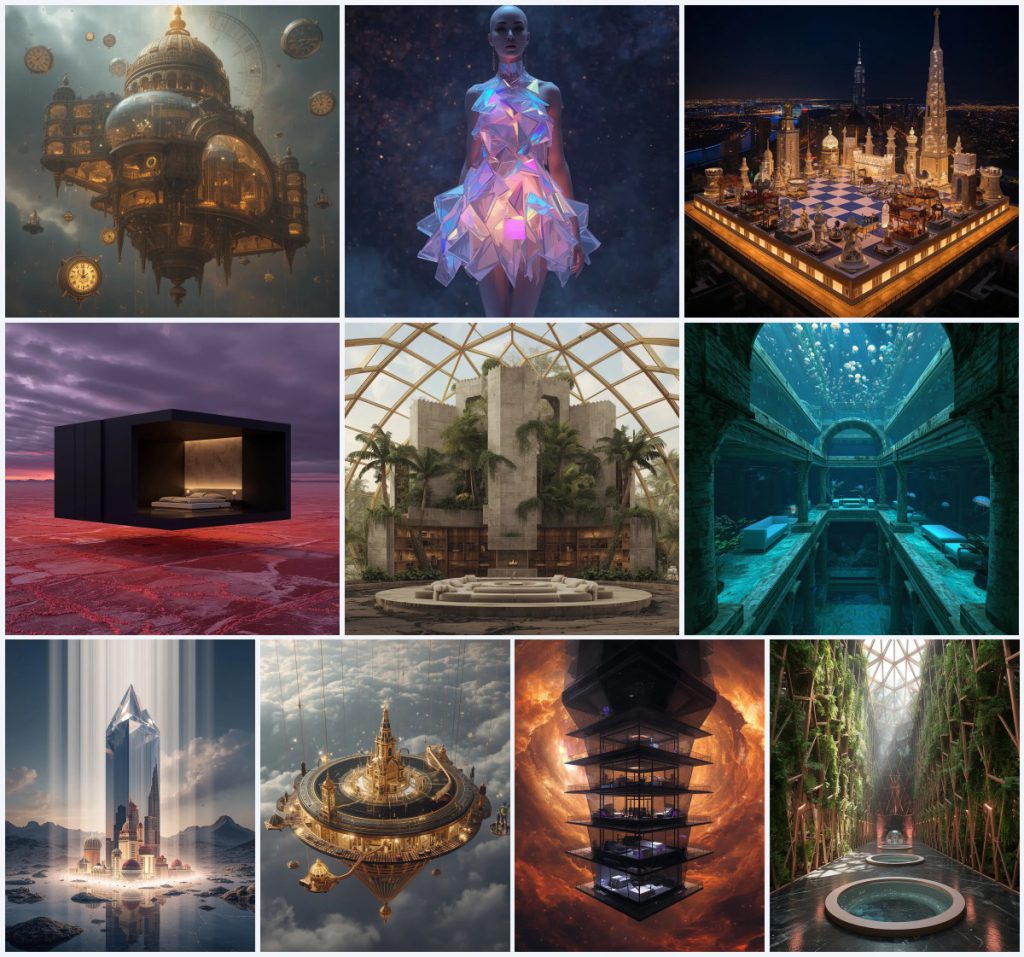
Futuristic cityscapes with dystopian tones blend grandeur with decay, creating visual stories that feel both aspirational and cautionary. This collection of ten prompts pushes that tension to imaginative extremes, turning architectural concepts into narrative-driven art. Each prompt invites you to picture a world where luxury, technology, and ruin coexist in cinematic harmony.
Whether you are generating a colossal museum adrift in time storms or a bioluminescent cathedral entwined with rose gold, these ideas demand attention to scale, texture, and mood. The article unpacks the shared scene across the set, highlights recurring visual details, and offers practical guidance on styles, tools, and troubleshooting. Use these insights to refine your AI-generated images and capture that unmistakable blend of wonder and melancholy.
What this set of futuristic dystopian cityscape prompts is asking for
This collection calls for monumental, imaginative architecture set against surreal or decaying backdrops. Each prompt fuses luxury materials with abandoned futures, cosmic settings, or reclamation by nature. The common thread is a sense of scale, drama, and premium design filtered through a dystopian lens, where beauty persists amid ruin.
- Colossal structures like a drifting museum or levitating monolith
- Luxury materials such as brushed rose gold, matte black carbon fiber, and crystal prisms
- Surreal environments including temporal storms, crimson salt deserts, and cosmic nebulae
- Bioluminescent elements like glowing moss, jellyfish, or neon-cyan light
- Contrasts between raw concrete and refined interiors
- Impossible perspectives and cinematic lighting that heighten drama
The shared scene across these ten prompts
The prompts share a vision of oversized, often isolated architectural wonders set in hostile or otherworldly landscapes. You will find recurring motifs like "a colossal, climate-controlled geodesic dome" encasing a brutalist fortress, or "an entire side of the monolith is a massive, single-sheet smart-glass window" revealing curated luxury within a barren desert. These clauses establish a tension between protective enclosures and the wild forces outside.
Nature and decay consistently intrude upon human-made grandeur. One prompt describes "dense, vibrant neon-green bioluminescent moss and exotic, prehistoric fern-like vegetation growing through the metal lattices" of a rose gold cathedral. Another imagines "glowing, bioluminescent jellyfish and rare, iridescent deep-sea flora" surrounding a submerged stepwell mansion. The scene is never static; it breathes with light, movement, and the weight of forgotten time.
Why this collection works for striking AI images
These prompts succeed because they combine specific, high-contrast visual instructions with open-ended imaginative freedom. The detailed material cues—carbon fiber, smart glass, raw concrete, crystal—give the AI clear texture targets, while the surreal contexts force unexpected compositions. This balance reduces generic outputs and increases the chance of a truly arresting image.
- High contrast between luxury interiors and hostile exteriors creates immediate visual drama.
- Recurring elements like bioluminescence and reflective surfaces produce dynamic lighting effects.
- The dystopian tone adds narrative depth, making each image feel like a still from an untold story.
Three visual styles baked into these prompts
The collection naturally leans into three distinct but overlapping styles. Every style is already present in the prompts, so you do not need to add external genre tags. The first is hyper-minimalist luxury, seen in the levitating monolith and inverted glass pagoda, where clean lines and premium materials dominate. The second is bioluminescent organic futurism, evident in the moss cathedral and stepwell mansion, where glowing flora and sea life reclaim architecture. The third is cinematic surrealism, driving the floating museum and crystal prism, where scale and impossible physics create a sense of awe.
- Hyper-minimalist luxury: Stark, smooth surfaces like matte black carbon fiber and smoked glass emphasize elegant isolation.
- Bioluminescent organic futurism: Neon-green moss and iridescent jellyfish introduce living light into decaying or submerged structures.
- Cinematic surrealism: Colossal drifting museums and light-splitting prisms defy physics for a grand, narrative feel.
How to generate images from these prompts
Start by copying the chosen prompt exactly as written, since the specific phrasing triggers the intended textures and atmosphere. Upload a mood reference if your tool allows, then generate an initial batch. After generation, closely inspect the hands, face, and main architectural object for distortions. Refine by adjusting lighting or material keywords in subsequent runs.
- Copy the full prompt. Select one prompt from the collection and copy every word to preserve the descriptive density.
- Upload a reference photo. Provide a photo with similar lighting or scale, such as a wide-angle architectural shot, to guide composition.
- Generate the first batch. Run the prompt through your chosen AI tool and produce four initial variations for comparison.
- Check hands and faces. If human figures appear, zoom in to verify fingers and facial features are anatomically correct.
- Inspect the main object. Examine the central structure—museum, monolith, or chessboard—for symmetry and material consistency.
- Refine and regenerate. Tweak terms like 'photorealistic textures' or 'dramatic lighting' and run again until the result matches your vision.
Choosing a reference photo for these prompts
A well-chosen reference photo anchors the AI in real-world physics before it extrapolates the surreal. Look for images that share the scale, lighting direction, or material quality described in the prompt. The reference does not need to match the subject exactly; it should guide the underlying structure and atmosphere.
- Use a high-resolution architectural photo with dramatic, angled lighting to mirror the cinematic mood.
- Select an image featuring reflective surfaces like glass or polished stone to reinforce the luxury material cues.
- Pick a reference with a clear foreground-background separation, helping the AI distinguish the main structure from the dystopian environment.
AI tools suited for these futuristic dystopian prompts
Different AI image generators handle surreal architecture and material detail with varying success. The table below compares four popular tools based on access, realism, and how they handle a specific prompt element from this collection.
| Tool | Access | Typical realism | Useful here for |
|---|---|---|---|
| ChatGPT | Free tier available | Moderate to high | Rendering the transparent dimensional chambers in the colossal museum drifting through temporal storms |
| Google Gemini | Free tier available | High | Capturing the bioluminescent jellyfish and iridescent flora around the submerged stepwell mansion |
| Leonardo AI | Free tier available | High to very high | Producing the matte black carbon fiber texture and crimson salt flat contrast in the levitating monolith |
| Midjourney | Paid subscription | Very high | Achieving the photorealistic textures and luxury branding on the monumental chessboard with gourmet kingdoms |
Three tips for refining these prompts
Small adjustments can dramatically improve the output. Focus on the tangible materials and objects already named in the prompt to sharpen the image without diluting the original concept.
- Emphasize 'brushed rose gold' and 'bioluminescent moss' in the cathedral prompt to intensify the contrast between metal and organic growth.
- Increase weight on 'smoky black glass' and 'swirling orange-red cosmic nebula' for the inverted pagoda to deepen the space atmosphere.
- Reinforce 'raw, board-formed grey concrete' and 'gold-tinted smart glass' in the brutalist terrarium prompt to clarify the boundary between interior and exterior.
Common issues and fixes for these prompts
Even detailed prompts can produce flawed results. The table below lists typical failures and the specific changes to address them, based on real weaknesses these prompts can exhibit.
| Issue | What to change |
|---|---|
| The levitating monolith appears grounded or tilted | Add 'completely untethered, exactly twenty feet above the surface' to reinforce the floating effect |
| The bioluminescent moss looks flat and non-glowing | Strengthen 'dense, vibrant neon-green bioluminescent moss' and specify 'emitting soft light' |
| The crystal prism splits into muddy, undefined beams | Clarify 'each beam reveals distinct gourmet cities and dessert kingdoms' to separate the dimensions |
| The submerged stepwell lacks the dry interior bubble | Emphasize 'pressurized underwater mansion' and 'invisible structural-glass bubble that keeps the interior completely dry' |
Frequently Asked Questions
Can I mix elements from different prompts in this collection?
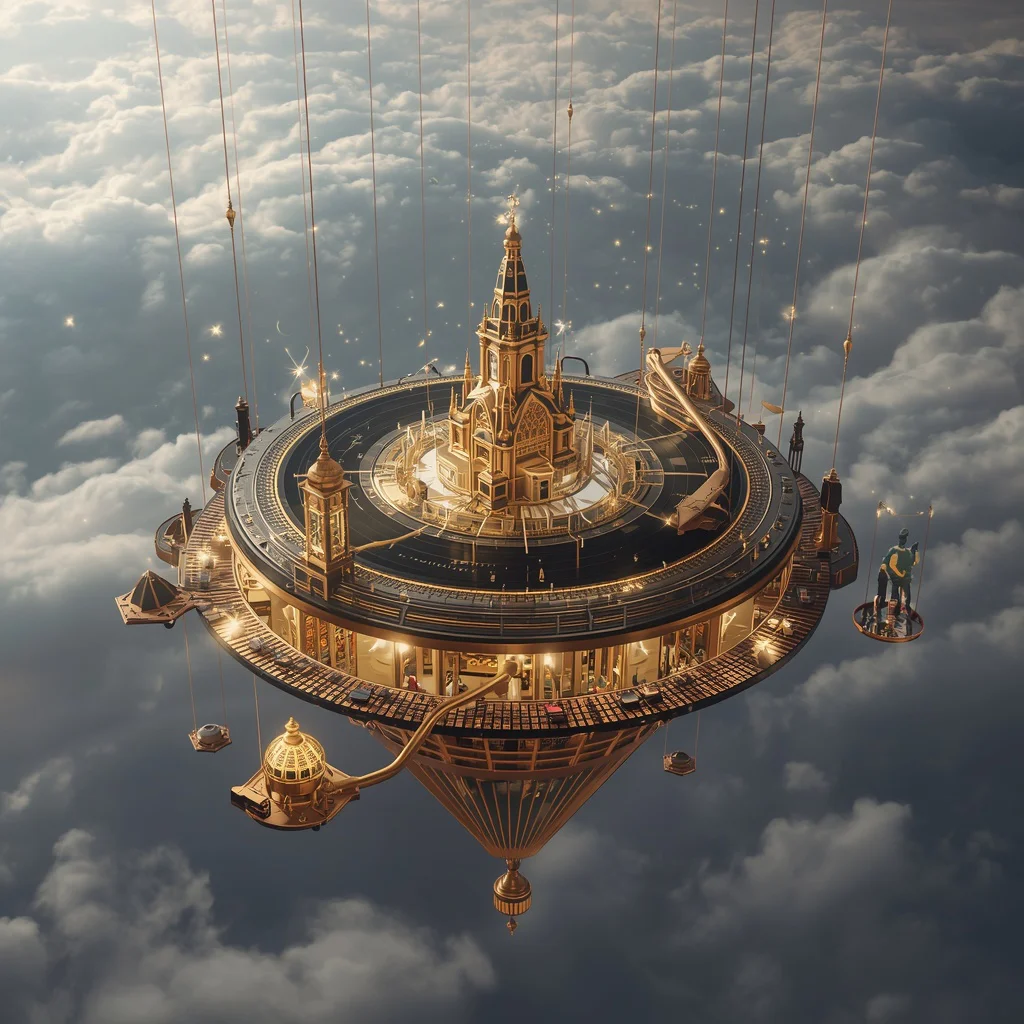
Yes, you can blend details like the bioluminescent moss from the cathedral with the floating record player concept. Keep the material and lighting keywords consistent to maintain a cohesive dystopian tone.
Why do some outputs look too clean and lose the dystopian feel?
If the image lacks grit, add terms like 'weathered stone,' 'decaying edges,' or 'overgrown vegetation' to the prompt. The collection already includes reclamation by nature, so pulling those phrases from the moss cathedral or stepwell mansion can restore the worn atmosphere.
Which prompt works best for a first-time user of AI image generators?
The levitating matte black monolith above a crimson salt desert is a strong starting point. It has a simple central object, clear material instructions, and a striking color contrast that most tools interpret well.
Conclusion
This set of ten prompts offers a rich playground for creating futuristic cityscapes with dystopian undertones. From colossal museums adrift in time to bioluminescent cathedrals, each concept provides enough specificity to guide the AI while leaving room for surprising interpretations. By applying the style insights, reference photo tips, and tool recommendations outlined here, you can generate images that feel both luxurious and haunting. Let the prompts inspire your next creative session and push the boundaries of what AI-generated architecture can convey.
Remember to only edit and share a photo you have the right to modify, whether it is your own reference or a generated image you created.